
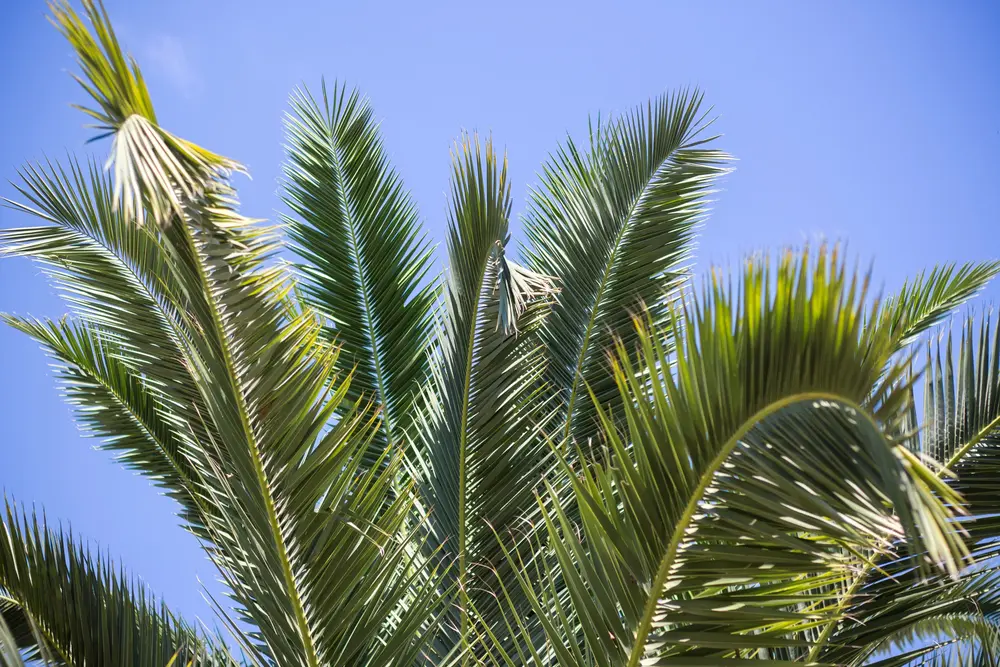
Any Town Tree in Naples, FL, Makes the Case for Keeping the Palms You Already Have
Before You Call for Palm Tree Removal, Read This First
It happens more often than you’d think. A homeowner in Naples decides a palm tree is in the way, looks scraggly, or just isn’t what they want anymore – and calls a tree service company to have it taken out. Sometimes removal is the right call. But a lot of the time, it isn’t. And once a mature palm comes down, there’s no undoing it.
Palm trees are one of the defining features of Southwest Florida’s landscape. They’re also more valuable – ecologically, aesthetically, and practically – than many people realize. Before you make a permanent decision, here’s what’s worth understanding about the palms already growing on your property.
Mature Palms Take Decades to Replace
This is the point that tends to land hardest when people really sit with it. A mature Sabal palm, a towering Royal palm, a Washington palm that’s been growing since the house was built, these trees represent decades of growth that simply cannot be fast-tracked.
You can plant a new palm tomorrow. In five years, it will still look like a young palm. In ten years, it will be a nice specimen. But the presence, the scale, and the character of a mature palm? That takes twenty, thirty, forty years – sometimes more – to develop.
When a tree service removes a mature palm, what gets planted in its place is almost never an equivalent replacement in any meaningful timeframe. If the goal is a better-looking yard now, there are usually ways to get there without permanent removal.
Palms Do More for Your Property Than You Might Realize
The case for keeping a palm tree isn’t just sentimental. Healthy palms contribute to your property in measurable ways:
Property value: Mature trees, palms included, are consistently associated with higher property values. In a market like Naples, where landscaping is part of what buyers are paying for, a mature palm canopy is an asset, not a liability.
Shade and temperature: Palms shade patios, driveways, pool decks, and west-facing walls. That shade reduces surface temperatures and, in homes with direct western sun exposure, can make a meaningful difference in cooling load.
Wind buffering: Properly maintained palms are remarkably wind-resilient – it’s part of what makes them so well-suited to Southwest Florida. Their flexible trunks and relatively compact canopies handle wind loading in ways that broad-canopied trees often can’t. They provide genuine buffering for structures and softer landscaping behind them.
Wildlife habitat: Palms support a range of native birds, bats, and beneficial insects. In an increasingly developed landscape, that habitat matters more than it used to.
Visual screening and privacy: A row of mature palms along a property line provides natural screening that would take years to replicate with any alternative planting.
Most Palm Problems Are Treatable, Not Terminal
One of the most common reasons homeowners consider palm tree removal is because the tree looks bad – fronds are discolored, growth seems stunted, the canopy looks sparse or off. The assumption is that something is fundamentally wrong and the tree is declining beyond help.
In many cases, that’s not what’s actually happening. Palm tree health issues in Naples are frequently the result of conditions that can be addressed with the right tree health care:
Nutritional deficiencies are extremely common in Southwest Florida’s sandy soils, which are naturally low in the magnesium, manganese, potassium, and boron that palms need to thrive. A palm with yellowing fronds, frizzled new growth, or a sparse canopy is often a palm that’s hungry, not dying. A proper plant health care program that includes targeted palm nutrition can turn a struggling tree around in one to two growing seasons.
Improper pruning is another major culprit. Over-pruned palms, those that have been repeatedly “hurricane cut” down to just a few fronds, are chronically stressed. They direct all their energy into frond replacement rather than into root development, trunk strength, and disease resistance. Correcting the pruning approach and allowing the canopy to recover often makes a dramatic difference in how the tree looks and performs.
Tree disease in palms is real but often misdiagnosed. Ganoderma butt rot, Fusarium wilt, and lethal bronzing are serious conditions that sometimes make removal the right answer. But they’re also conditions that resemble nutritional deficiency and improper care in the early stages. An arborist who actually evaluates the tree – rather than glancing at it from a distance – can tell the difference. That distinction matters enormously before a permanent decision is made.
“Hurricane Cut” Palms Deserve a Second Chance
If your palm has been aggressively pruned in the past, stripped back to a tight cluster of upright fronds in the name of storm preparation, it may look rough enough that removal feels like the logical next step. We’d encourage you to pause before going there.
Hurricane cutting is one of the most harmful and most common practices in South Florida palm care. Despite being marketed as storm preparation, removing green fronds actually weakens palms rather than protecting them. Green fronds store nutrients and energy.
Removing them forces the tree into a recovery cycle that diverts resources from everything else – including the root system and trunk integrity, which actually determine how a palm performs in a storm.
A palm that’s been repeatedly over-pruned can look genuinely bad for a year or two after care is corrected. But with proper tree pruning going forward, removing only dead, dying, and fully brown fronds, most palms recover meaningfully. The question isn’t whether the tree looks good right now. It’s whether it has the structural and biological capacity to recover, and in many cases, the answer is yes.
When Removal Actually Is the Right Answer
We’re not making the case that every palm should be kept regardless of circumstances. There are situations where tree removal is genuinely the correct recommendation, and a good arborist will tell you so honestly:
When a tree risk assessment identifies structural failure that cannot be mitigated — a compromised root system, advanced trunk decay, or significant lean toward a structure
When lethal bronzing or Fusarium wilt has been confirmed, and the tree is beyond the point where treatment can realistically arrest the decline
When a palm is in a location that creates unavoidable and worsening conflict with structures, utilities, or other trees
When the tree is a species that poses a documented invasive risk in Southwest Florida’s ecosystem
In these situations, removal is the responsible path. But these are specific, diagnosable conditions, not “the fronds look yellow” or “it’s not as full as it used to be.”
What a Proper Palm Assessment Looks Like
Before any decision is made about a palm’s future, it deserves a real evaluation. That means:
A visual inspection of the canopy, including the color, orientation, and condition of both old and new fronds
Assessment of the spear leaf — the newest emerging frond — which is one of the most telling indicators of palm health
A look at the trunk for signs of Ganoderma (the shelf-like conk that signals butt rot), soft spots, or unusual discoloration
Evaluation of the root zone and surrounding soil, including drainage patterns and any signs of root stress
A review of the tree’s pruning history and current nutritional program, if any
This kind of tree risk assessment takes time and attention. It’s the difference between a guess and an informed recommendation. And when the stakes are a tree that took decades to grow, it’s worth doing right.
The Bottom Line on Palm Removal
Palm trees are one of the things that make Naples look and feel like Naples. Removing one — especially a mature one — changes a property in ways that take decades to recover from, if they’re recoverable at all. Many palms that look like candidates for removal are actually candidates for better care.
Before you make a permanent decision, get a real assessment from a qualified arborist. Find out what’s actually going on with the tree, what the realistic options are, and what thoughtful tree care could do for it. You may be surprised at what’s possible.
And if removal genuinely is the right answer, you’ll make that decision with confidence — knowing it was based on facts, not assumptions.
About Any Town Tree
Any Town Tree is a Naples, FL-based tree service company serving homeowners and properties throughout Southwest Florida. From tree pruning and tree trimming to tree removal, tree risk assessment, tree disease identification, and comprehensive plant health care, our team brings genuine arborist expertise to every job. We understand the specific demands of Florida’s climate and the unique role that palms play in the Southwest Florida landscape — and we’re committed to helping our customers make informed decisions about every tree on their property.