
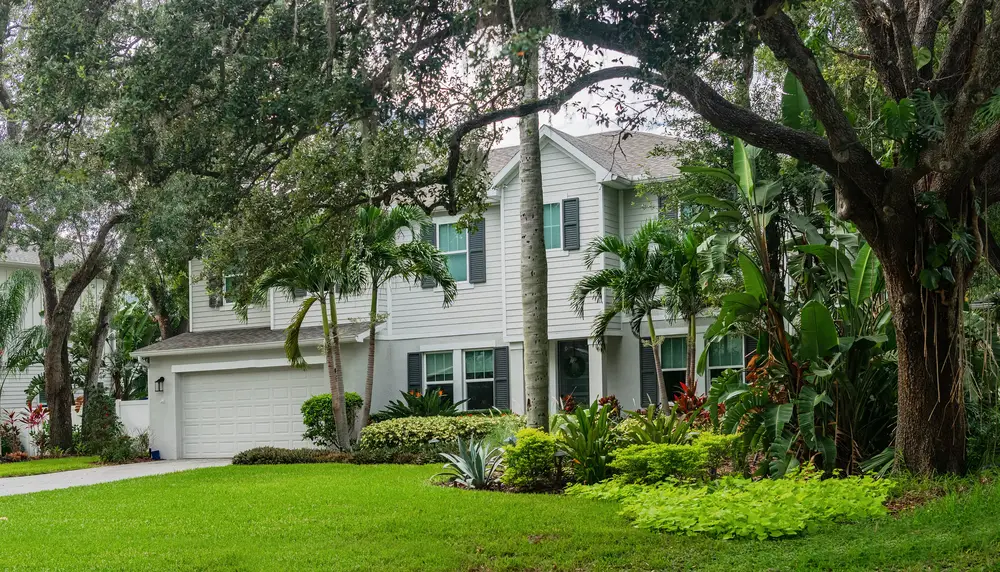
Tree Service Experts in Naples, FL, Explain 5 Red Flags Collier County Insurers Look For.
Tips for Keeping Your Trees Insurance-Friendly
For many Collier County homeowners, the first sign of trouble with their insurance isn’t a hurricane—it’s a letter. Sometimes it follows an inspection. Other times, it arrives out of the blue with photos attached and a warning about “vegetation hazards” or “danger trees” on your property.
That’s because many insurers are now reviewing homes from above using drones and high-resolution aerial imagery. From that vantage point, they can quickly spot dead trees, heavy limbs hanging over roofs, dense canopies that haven’t been maintained, and yard conditions that might lead to big claims after the next storm. In some cases, they’ll raise your premium. In others, they’ll threaten to drop or non-renew your policy unless the issues are fixed.
Meanwhile, from your point of view, you just have shade trees, privacy, and a yard you’ve been living with for years. The gap between those perspectives is where a lot of frustration and surprise insurance problems start.
The good news: with a better understanding of what insurers are looking for, and some help from a qualified tree service company, you can keep your property both beautiful and “insurable” on paper.
How Trees and Drones Factor Into Your Coverage in Collier County
When a carrier looks at your home from the sky, they’re not admiring your landscaping. They’re scanning for risk. Drone footage and aerial photography make it easy to flag properties with:
Dead or visibly declining trees close to the home.
Large, overhanging limbs directly above roofs, lanais, or pool cages.
Leaning trees or crowded canopies that look unmanaged.
Obvious storm debris or broken limbs still hanging in the canopy.
From that imagery alone, they can decide which homes need closer review, which ones get a renewal with conditions, and which policies they’re more comfortable dropping ahead of storm season. If your yard reads as neglected or “high risk” from above, they don’t need to wait for a claim to act.
So how can homeowners take a proactive approach in ensuring their trees are not a risk to their homeowners’ insurance? It starts with knowing what flags to look for.
Red Flag #1: Dead or Dying Trees Left Standing
From an insurance standpoint, dead or severely declining trees are some of the biggest red flags on a property. They’re far more likely to fail in a storm—and when they do, they don’t just damage buildings. They can block roads, hit vehicles, or take down utilities.
You might be dealing with a dead or dying tree if you notice:
Large sections of bare branches compared to similar trees nearby.
Bark falling off in sheets, deep cracks, or obvious decay.
Fungi or mushrooms at the base, suggesting internal rot.
Major limbs that are clearly dead, brittle, or hollow.
Leaving these trees in place, especially near your house or driveway, can make your property appear high-risk. A certified arborist can perform a tree risk assessment to determine whether tree removal is necessary or whether targeted pruning and focused tree health care can safely stabilize the tree.
Red Flag #2: Heavy, Overhanging Branches Above the Roof
A big, leafy canopy can be beautiful, but when thick branches hang directly over your roof, pool cage, or screened lanai, insurers see potential projectiles. In high winds, those branches can:
Break and puncture roofing or skylights.
Collapse pool enclosures or fences.
Rip gutters and soffits away from the house.
In Naples, where hurricane season is a fact of life, carriers pay close attention to aerial photos that show dense, unmaintained canopies resting on or over structures.
Regular tree pruning and trimming by a professional tree service can reduce canopy weight, increase clearance over the roof, and remove weak or crossing branches. Done correctly, this improves tree health rather than harming it, and it sends a clear message to insurers that you’re managing risk, not ignoring it.
Red Flag #3: Trees Crowding the House, Roof, or Power Lines
Some homes were built with mature trees already close to the structure. Others had “small” ornamentals planted next to the house that eventually grew into full-sized shade trees. Either way, when trunks or major limbs are only a few feet from the home, you’re more likely to see:
Branches scraping shingles, siding, or screens.
Constant leaf and debris buildup in gutters and on the roof.
Moisture and mildew problems where the tree blocks airflow and sunlight.
Higher risk of direct impact if the tree or a major limb fails.
If those same trees are also near power lines, the risk increases even more, and utilities or insurers may insist on corrective action. A tree service company can advise whether structural pruning, cabling, or growth management is enough, or whether long-term safety and insurability mean considering tree removal and replanting farther from the home.
Red Flag #4: Obvious Neglect and Storm Debris
You don’t need a trained eye to spot a yard that hasn’t been maintained in a long time. From the street—or from a drone—insurers notice properties where:
Broken or hanging limbs (“widowmakers”) are still lodged in the canopy.
Leaning trees were never evaluated after a storm.
Large downed limbs, stumps, or dead shrubs are left where they fell.
Palm fronds and seed pods are never cut, creating extra wind resistance.
To a carrier, that doesn’t just look messy, it looks like a pattern. If you’re not investing in visible tree care, they’ll assume hidden issues are being ignored, too. Seasonal cleanup and tree health care, especially before or after storm season, can go a long way in reducing those red flags and helping your property look like a safer bet on aerial review.
Red Flag #5: Roots Threatening Structures or Hardscape
While insurers mostly focus on what falls down, they’re also increasingly aware of what’s happening underground. In Naples’ sandy soils, shallow root systems can still cause damage when trees are planted too close to:
Driveways and walkways
Pool decks and patios
Seawalls and retaining walls
Uplifted slabs, cracked concrete, and leaning hardscape can all be signs that roots and structures are competing for space. Even if your carrier doesn’t flag this immediately, leaving it unaddressed can raise questions during inspections or future claims.
An arborist can evaluate the root zone and recommend options, from selective root pruning and barriers to relocation or removal if the tree is already failing. That way, you protect both your property and the overall health of your trees.
How to Tell If a Tree Is Truly “Dangerous”
Not every big tree is a danger tree. Insurers sometimes overgeneralize, but a professional tree risk assessment looks at specific factors:
Species: Some trees tolerate wind and saturated soil better than others.
Structure: Is the trunk sound? Are there co-dominant stems or major cracks?
Defects: Cavities, decay, dead tops, or large dead limbs matter more than size alone.
Site: How close is the tree to targets like your home, pool cage, or neighbor’s property?
History: Has the tree been regularly pruned, or was it topped or badly cut in the past?
Simple Steps to Protect Both Your Coverage and Your Trees
You don’t have to wait for a non-renewal letter to address potential issues. A few proactive steps can make your property look much more “insurable” both from the ground and from the air:
Schedule a professional tree inspection once a year. An expert can identify early signs of tree disease, decay, and structural problems before they become obvious hazards.
Address dead or severely declining trees promptly. Removing one high-risk tree now can prevent far more serious damage and difficult conversations with your carrier later.
Keep canopies thinned and elevated where appropriate. Proper pruning reduces wind resistance and keeps branches off roofs without sacrificing shade or long-term tree health care.
Clean up storm damage quickly. Don’t leave broken limbs or tilted trees untouched after a wind event. Quick action shows you’re actively managing risk.
Document your efforts. Keep invoices or reports from your tree service company. If your insurer ever has questions, you’ll have proof that you’re taking reasonable steps to maintain a safe property.
These habits don’t just keep insurers happy; they also support healthier, longer-lived trees and a safer yard for your family.
About Any Town Tree
Any Town Tree helps Naples homeowners balance curb appeal, shade, and safety in a coastal environment where storms and insurance standards are always part of the equation. Their ISA-certified arborists and experienced crews provide thoughtful tree care—from risk assessments and pruning to removals and long-term plant health care—with a focus on protecting both your home and your trees. If you’re concerned that your landscaping might be putting your coverage at risk or you’ve been warned about “danger trees,” Any Town Tree can walk your property, explain your options, and create a plan that keeps your landscape beautiful, safe, and easier to insure.