
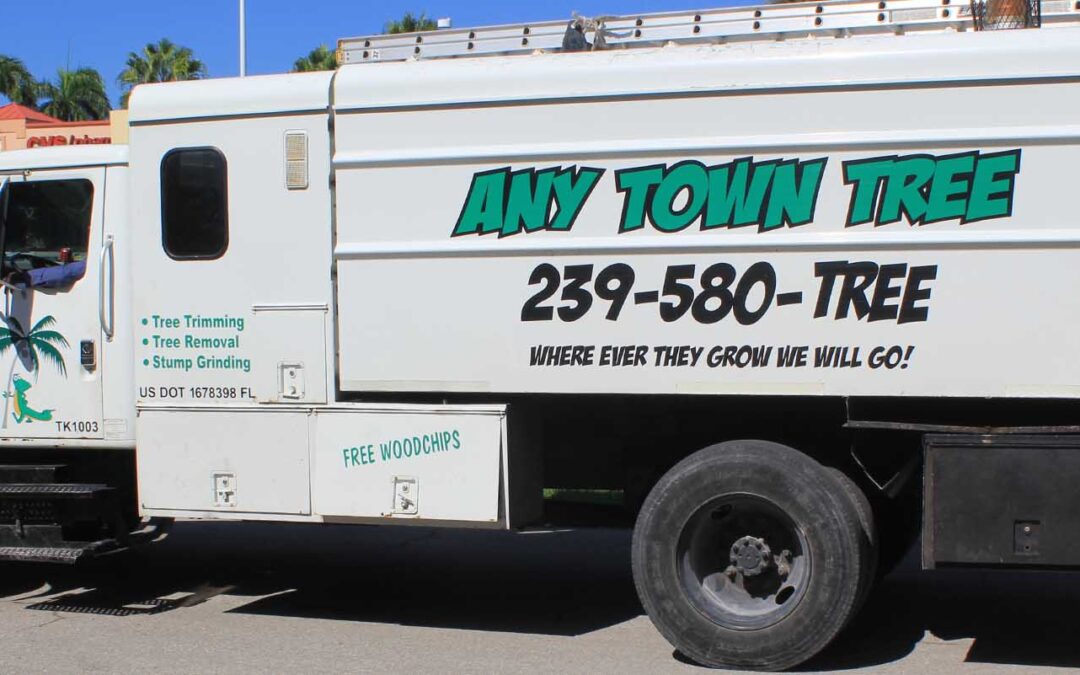
Any Town Tree in Naples, FL, Shares What Separates Truly Great Tree Care from the Rest
How to Find a Tree Service Company You Can Actually Trust in Southwest Florida
Naples is unlike almost anywhere else in Florida — and that goes for its trees just as much as its lifestyle. The lush, tropical canopy that makes this area so visually striking is also one of its most demanding maintenance challenges. Between hurricane season, salt air, intense heat, and soils that behave nothing like what you’d find anywhere else in the country, trees here face a level of stress that requires real expertise to manage well.
Any Town Tree has been part of this community long enough to understand what Southwest Florida trees actually need — not just what works in a general tree care manual, but what works here, in this climate, in these conditions. Here’s what we’ve learned and why it shapes how we approach every single job.
Florida Trees Are a Different Conversation Entirely
If you’ve lived anywhere else in the country and moved to Naples, you already know that landscaping here operates by different rules. The same is true for tree care.
Southwest Florida’s environment creates a specific set of pressures that every tree on your property is dealing with year-round:
Hurricane and tropical storm exposure that tests the structural integrity of every tree, every season — not just the obvious ones.
Salt air and wind off the Gulf affect coastal species differently than inland trees and accelerate certain types of decline.
Sandy, fast-draining soils that limit moisture retention and can leave trees nutrient-deficient despite regular rainfall.
Year-round heat and humidity create ideal conditions for fungal tree disease, pest pressure, and the rapid spread of both.
Aggressive growth rates mean trees in Naples can develop structural problems faster than they would in cooler climates.
Understanding these conditions isn’t optional for a tree service company operating in this market. It’s the foundation on which everything else is built.
Storm Readiness Starts Long Before Hurricane Season
In Naples, one of the most important things a qualified arborist does has nothing to do with what’s happening right now — it’s about what’s coming. Hurricane preparedness is a year-round mindset for responsible tree care here, and it starts with understanding which trees on your property are genuinely ready for a major weather event and which ones are not.
A thorough tree risk assessment before storm season looks at:
Structural weaknesses in the canopy — heavy, unbalanced limb distribution that creates leverage in high winds
Root zone health and anchoring, especially in the sandy soils common throughout Naples
Co-dominant stems and included bark, which are among the most common causes of catastrophic branch or whole-tree failure in storms
Dead or dying wood that becomes airborne debris long before a healthy limb would
Species-specific vulnerabilities — some trees common in Southwest Florida handle wind loading well; others don’t
Proactive tree pruning and tree trimming before storm season isn’t just good tree care — it’s risk management for your home and your neighbors. The trees that fail in a hurricane almost always had warning signs that a trained eye could have identified beforehand.
Tree Health Care in a Tropical Climate Is Year-Round Work
One of the biggest differences between tree care in Naples and tree care in a temperate climate is that there’s no real off-season here. Trees are actively growing, pests are active, and disease pressure doesn’t take a winter break. That means tree health care in Southwest Florida is a continuous conversation, not an annual checkup.
Our approach to plant health care looks at what’s affecting your trees right now and what’s likely to affect them next:
Identifying early signs of tree disease before they’ve had a chance to spread or cause irreversible damage
Monitoring for pest pressure — from boring insects to the kinds of fungal and bacterial issues that thrive in heat and humidity
Assessing soil conditions and nutrition, because sandy soils in this region often need amendment to support the tree health that the visible canopy suggests
Evaluating irrigation patterns that may be creating stress rather than relieving it — both overwatering and underwatering are common culprits
A tree that’s struggling in Naples often isn’t struggling because of one single problem. It’s usually a combination of factors that compound each other. Good plant health care untangles that combination and addresses it at the root — literally and figuratively.
What a Real Tree Inspection Reveals
Most homeowners look at a tree and see what’s visible from the ground: the canopy, maybe the trunk, the general shape, and color. A trained arborist looks at the same tree and sees an entirely different picture.
A proper tree health assessment goes well beyond the surface:
Canopy density and distribution: Is foliage where it should be, or are there areas of dieback that suggest internal problems?
Bark condition: Cracks, cankers, unusual discoloration, or areas where bark is separating from the wood beneath
Base and root flare: Mushrooms, conks, soft spots, or soil conditions at the base that suggest decay or root disease
Branch attachment quality: How major limbs connect to the trunk, and whether those connections are structurally sound
Overall lean and weight distribution: Especially important in sandy soils, where root anchoring can be compromised
In many cases, what we find during an inspection changes the conversation entirely. A tree a homeowner assumed was fine turns out to have a condition that warrants attention. A tree someone assumed needed to come down turns out to be salvageable with the right care. Neither answer is automatic — it depends on what’s actually there.
Tree Removal: Knowing When It’s Necessary
No reputable tree service leads with removal. Mature trees in Naples take a long time to grow, and they do a lot for your property — shade, privacy, curb appeal, habitat, and, in some cases, meaningful protection from wind and sun exposure on your home.
But there are situations where removal is the honest, responsible answer:
When structural failure is likely and poses a genuine risk to people, structures, or neighboring properties
When tree disease or internal decay has progressed to a point where the tree cannot be stabilized
When a tree has been so severely damaged by a storm that restoration isn’t realistic
When the species is inherently problematic for the location — invasive, incompatible with surrounding infrastructure, or simply the wrong tree for the site
When we recommend tree removal, we explain the specific reasons — what we found, what it means, and why we believe removal is the right path rather than continued management. And when removal isn’t necessary, we’ll tell you that too, even if it means walking away from a larger job.
Pruning Done Right in a High-Growth Environment
Naples trees grow fast. That’s one of the things people love about living here — a newly planted tree establishes quickly, and a mature tree creates an impressive canopy in a fraction of the time it would take in a northern climate. But fast growth also means structural problems develop faster, and the window for corrective pruning is shorter.
Tree pruning in this environment requires understanding not just where to cut, but how aggressively a given species can be pruned without triggering stress responses that create more problems than they solve. Over-pruning in Florida’s heat can cause sun-scald, dehydration stress, and rapid regrowth of weak, poorly attached shoots. Under-pruning leaves structural issues in place that worsen with every growth flush.
Good tree trimming in Naples is tailored to the species, season, tree’s current condition, and proximity to structures and utilities. It’s not a one-size-fits-all service — and any company treating it that way isn’t serving your trees well.
The Standard We Hold Ourselves To
Plenty of tree service companies operate in the Naples area. Here’s what we think distinguishes the ones worth hiring from the ones worth avoiding:
They start with an honest assessment, not a pitch. The first conversation should be about your trees, not about closing a job.
They explain their reasoning. A good arborist doesn’t just tell you what to do — they tell you why, in terms that make sense to someone who isn’t a tree specialist.
They understand local species and conditions. Southwest Florida’s tree inventory is specific. The challenges here are specific. Generic tree care knowledge isn’t enough.
They don’t treat every problem as a removal opportunity. Tree removal is sometimes the right answer. It shouldn’t be the default one.
They back up their work. If something doesn’t look right after a job is done, a quality tree service company shows back up.
They think about your property long-term. The best tree care relationships in this industry aren’t transactional — they develop over time, and they’re built on trust that accumulates visit by visit.
Serving Naples and Southwest Florida
Any Town Tree serves homeowners and property managers throughout Naples and the surrounding Southwest Florida communities. Whether you’re preparing for hurricane season, dealing with a tree that’s been declining, looking for routine tree trimming and maintenance, or simply want a professional set of eyes on what you have, we’re here to give you a straight, honest answer.
Your trees are worth caring for properly. We’re here to help you do that.